
The Collapse of Traditional Search
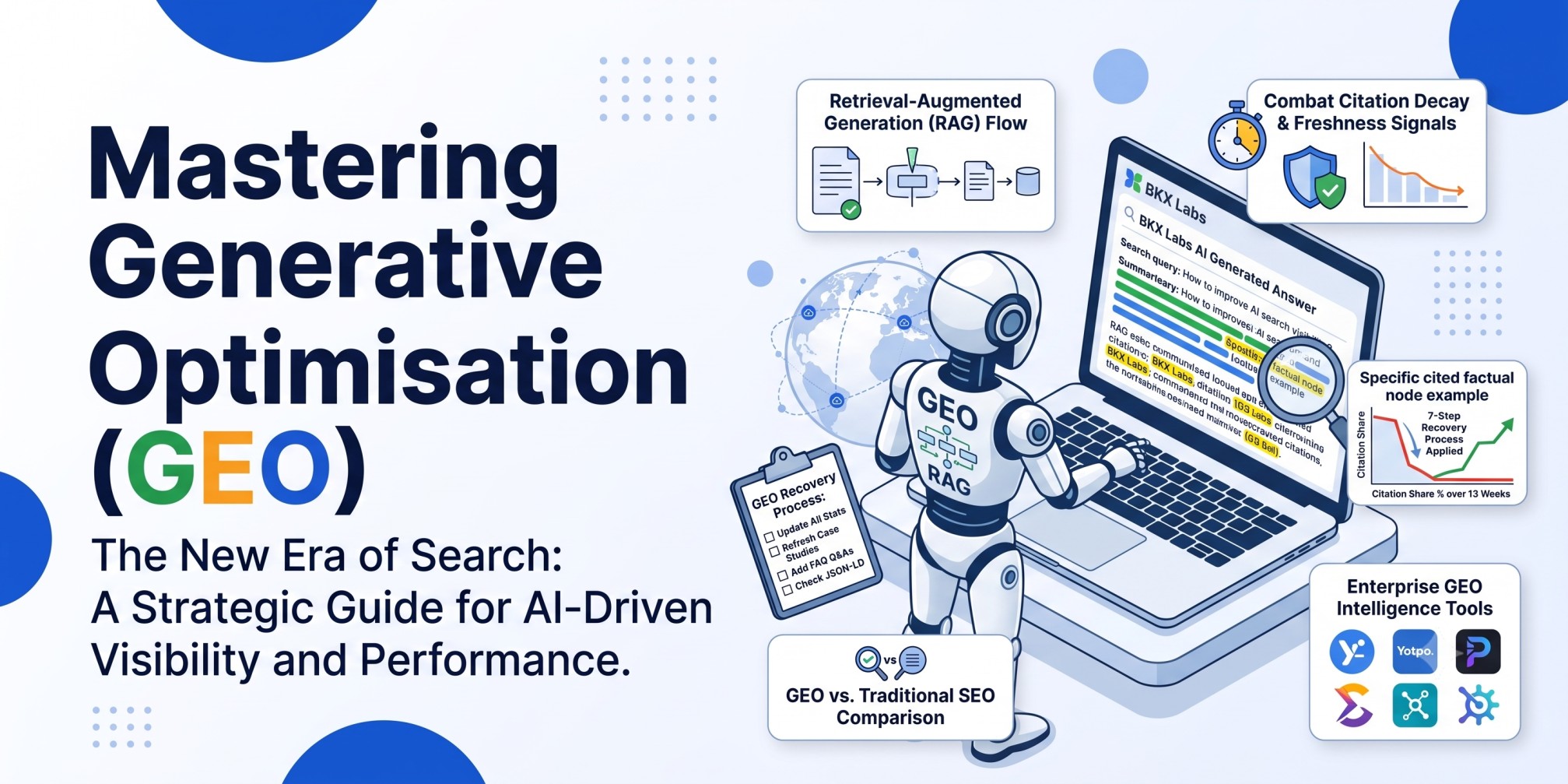
The digital marketing landscape has experienced a violent structural shift. The traditional search ecosystem is dying. Users no longer type fragmented keywords to scroll through a paginated list of blue hyperlinks. Instead, they receive synthesized, AI written answers directly from Generative Engines.
Platforms like Perplexity, ChatGPT, Bing Copilot, and Google AI Overviews now dominate the top of the search funnel. If a corporate website is not explicitly cited within these AI generated responses, that brand is virtually invisible to the modern consumer.
This shift has created a massive panic among digital marketers and technical SEO professionals. The old rules of building domain authority and stuffing long tail keywords no longer apply. To survive this transition, organizations must adopt Generative Engine Optimization.
GEO is the technical practice of structuring web content specifically for AI ingestion. It blurs the line between content creation and technical web architecture. Websites must now be built for the machines that synthesize the web, not just the humans who read it.
The Mechanics of Retrieval Augmented Generation (RAG)
To optimize for AI engines, you must understand how they fetch data. Generative search engines rely on a backend architecture known as Retrieval Augmented Generation. RAG is the bridge between a static language model and live internet data.
In the early days of Generative AI, models relied solely on their training data. This caused hallucination rates as high as 60 percent. RAG solves this by grounding the AI in verifiable web data, dropping hallucination rates down to an operational 3 to 5 percent.
When a user submits a query, the generative engine does not just guess the answer. It deploys a web crawler. Crawlers like OpenAI GPTBot or Anthropic ClaudeBot rapidly scan the internet for semantically clear, structurally organized data.
The system converts this web text into vector embeddings. These embeddings are mathematical representations of semantic meaning. The engine performs a vector search to find content that mathematically aligns with the user intent.
Once the RAG system retrieves the top factual sources, it injects them into the context window of the Large Language Model. The LLM then synthesizes these discrete data points into a single, authoritative answer, citing the sources it used.
If your website architecture blocks these crawlers, or if your content is poorly structured, the RAG system will ignore your domain entirely.
The Entity Authority Economy
This RAG architecture has fostered a new digital economy based on "Share of Model" and Entity Authority. AI models exhibit strong mathematical preferences for specific sources. They prefer a concentrated list of top tier authorities within a given knowledge category.
You are no longer competing for a ranking position from one to ten. You are competing to be the single ground truth source that the AI trusts. Building Entity Authority requires publishing dense, factual, and highly specific data that an AI can easily verify against other trusted databases.
Structural Pillars: GEO vs. Traditional SEO
Transitioning a corporate website to strict GEO compliance requires abandoning outdated SEO habits. Traditional SEO rewarded long form pages designed for human scrolling. It prioritized keyword density and the sheer volume of backlinks. GEO requires a completely different structural approach.
Self Contained Information Blocks GEO rewards self contained, extractable paragraphs of high information gain. An AI model does not want to read a 3000 word narrative essay. It wants autonomous Question and Answer blocks.
Keep paragraphs between 150 to 300 words. Use conversational yet highly precise language. These are the exact syntactical formats that LLMs prefer to extract verbatim.
Explicit Data Structuring Adding structured micro data is no longer optional. LLMs are probabilistic mathematical machines. You must pre digest your content for them.
Implementing comprehensive Schema.org markup is mandatory. You must use JSON-LD for FAQs, Articles, Products, and Reviews. This structured data significantly increases the mathematical likelihood of the model selecting your content for citation.
Server Side Rendering (SSR) Clean HTML formatting is vital for GEO. Websites that rely heavily on client side JavaScript rendering are failing in the AI era.
If your core content requires the browser to execute JavaScript before it becomes visible, many AI crawlers will simply see a blank page. Implementing Server Side Rendering ensures that the raw HTML contains all critical text immediately upon request.
Semantic Depth Over Keywords Stop tracking keyword density. AI models understand semantic distance, not keyword frequency. Focus on raw fact density. Include precise statistics, exact dates, and verified entity names. The more factual nodes your content contains, the higher its value to a RAG system.
The Threat of Citation Decay
A fascinating and highly technical sub topic within GEO is the phenomenon of Citation Decay. In the past, a high quality SEO ranking could passively generate traffic for years. Under GEO, citations rot rapidly.
Industry data suggests that approximately 50 percent of the content cited in AI answers is less than 13 weeks old. Generative engines are obsessed with freshness. This decay occurs across three distinct vectors.
Statistical Decay When the data points in your article become outdated, the AI will replace your citation with a newer research report.
Structural Decay AI engine preferences shift frequently. A model update might suddenly prefer bulleted lists over short paragraphs for technical summaries.
Competitive Decay Rival firms constantly publish more authoritative, entity dense data. If a competitor answers the prompt more efficiently, the RAG system will swap your citation for theirs.
The 7 Step Recovery Process
To combat citation decay, digital agencies must implement continuous maintenance protocols. A highly actionable 7 step recovery process is required to maintain Share of Model.
Step 1: Update All Statistics Audit your top performing pages monthly. Replace every percentage, financial figure, and data point with the most recent available data. This simple step often restores citation frequency within weeks.
Step 2: Refresh Case Studies AI models look for recency signals. Add new outcomes, recent dates, and updated client metrics to existing case studies to signal content freshness.
Step 3: Enhance FAQ Sections Monitor current trending queries using enterprise tools. Add new Q&A blocks to your existing content that directly answer these emerging user questions.
Step 4: Strengthen External Citations An AI judges your content by the company it keeps. Audit your outbound links. Replace broken links or outdated commercial links with recent academic sources or primary data providers.
Step 5: Adjust Linguistic Tone Different models have different preferences. A prompt on Perplexity might require a highly academic tone, while ChatGPT prefers a conversational approach. Adjust your syntax to match the dominant AI engine in your specific niche.
Step 6: Refresh dateModified Schema Never update a page without updating the backend code. Ensure your JSON-LD schema explicitly updates the "dateModified" tag so crawlers immediately recognize the fresh content.
Step 7: Monitor Crawl Frequencies Stop looking at traditional traffic metrics. Analyze your server log files. Track exactly how often GPTBot and ClaudeBot hit your URLs. A drop in bot crawl frequency is an early warning sign of impending citation decay.
Enterprise Intelligence Tools for GEO
Legacy SEO dashboards are completely insufficient for the AI era. Tracking keyword positions is useless when every user receives a highly personalized, dynamically generated answer. Enterprise brands require entirely new toolkits.
Modern GEO tools must offer longitudinal data storage and the ability to track millions of conversational permutations.
Profound This tool allows marketing teams to run cross model prompt testing. You can compare how ChatGPT, Claude, and Gemini answer the exact same question. It highlights where your brand is cited and where competitors are winning the Entity Authority battle.
Yotpo Discover For digital agencies focused on e commerce, this platform provides commerce native AI visibility tracking. It analyzes how autonomous shopping agents are recommending specific products.
Evertune This platform is critical for competitive intelligence. It tracks AI response variations over time, allowing teams to spot citation decay before it impacts bottom line revenue.
Ahrefs Brand Radar This tool has evolved to map the semantic distance between a brand and key entity topics. It helps technical marketers understand how closely an AI associates their corporate name with specific industry solutions.
Architecting for the Future
The transition to Generative Engine Optimization is not a temporary marketing trend. It is a permanent shift in web architecture. Building visibility in 2026 requires strict adherence to technical formatting, aggressive combat against citation decay, and deep knowledge of RAG mechanics.
Software development agencies that master these structural pillars will dominate digital visibility. They will capture the highly qualified, intent driven traffic that traditional search engines can no longer provide. You must build your infrastructure not just for the human eye, but for the mathematical precision of the generative engine.